
GEO 101 for Enterprise Marketers: How Sitefinity's Schema.org Automation Gets You Found by AI Engines
Traditional SEO rankings are no longer the sole metric of success. Learn how Generative Engine Optimization (GEO) changes the way your business is cited by LLMs.
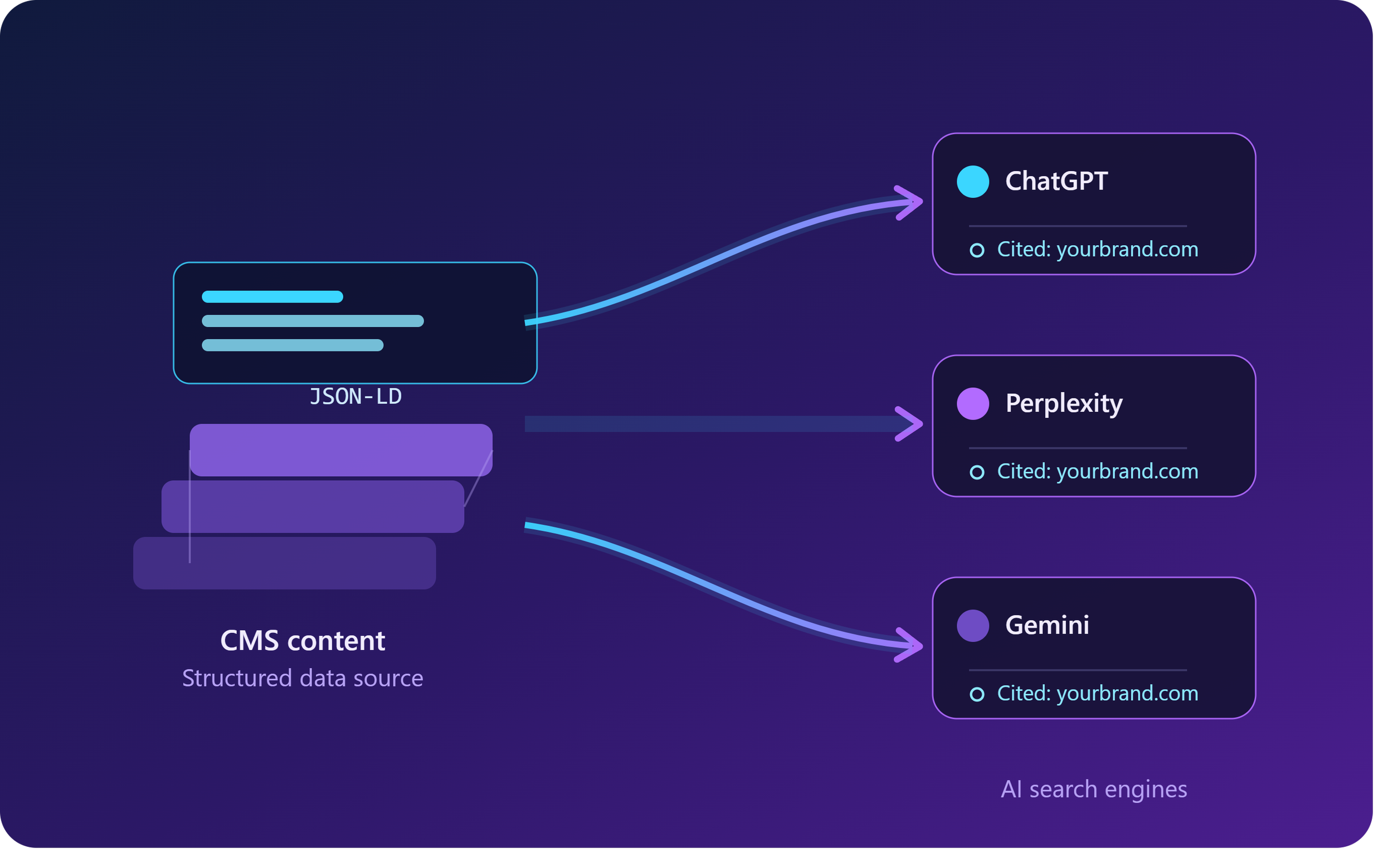
The problem: Ranked on Google, but invisible to AI engines
Historically, your digital marketing success was measured by securing the top spot on Google’s organic search results page. Today, however, enterprise buyers are bypassing standard search result links entirely. Instead, they ask complex, natural-language questions directly to ChatGPT, Perplexity, and Google Gemini (AI Overviews). If your corporate website consists solely of unstructured, free-form text, these AI crawlers cannot quickly parse your technical specifications, pricing models, or office locations. As a result, your brand is left out of the synthesized answers these engines generate for your prospective clients.
What is GEO (Generative Engine Optimization)?
GEO is the next frontier of digital visibility. Instead of optimizing your pages exclusively for traditional search ranking crawlers, you are preparing your data structure to feed Large Language Models (LLMs) and Retrieval-Augmented Generation (RAG) pipelines. To be cited as a trusted source by an AI assistant, your content must be delivered in an exceptionally clean, logically organized, and machine-readable format. The cornerstone of this readability is the precise application of Schema.org structured data.
How Sitefinity 15.4 automates structured data with zero development effort
In previous years, implementing Schema.org micro-markup meant writing custom JSON-LD code for every product, service, or event page—a workflow that continuously burdened your software development backlog.
Sitefinity 15.4 eliminates this technical bottleneck:
Instant JSON-LD Generation: The platform automatically translates your existing content fields, custom taxonomies, and metadata into valid Schema.org JSON-LD code on the fly.
Foundational GEO and AEO Readiness: As soon as you publish a product page or case study, Sitefinity builds a clear semantic profile, making it effortless for AI search bots to crawl, understand, and cite your brand.
Zero Technical Debt: The CMS dynamically aligns your structured data with Google's changing validation guidelines, keeping your technical SEO compliant without needing developer intervention.
Why this matters for your market position today
While your competitors are still debating how to adjust their blogging strategies to combat declining search volumes, implementing Sitefinity 15.4's automated Schema architecture gives your business a distinct head start:
High-Intent AI Citations: When a potential buyer asks an AI engine, "Which enterprise .NET development firms operate in the Nordics?", your business is surfaced with accurate details and a direct citation link because your structural data is clean and highly legible to the model.
Rich Snippets & AI Overviews: Google leverages this identical structured data to populate its own AI-powered summaries, ensuring your company is featured prominently at the very top of search queries.
"In the era of generative search, if your content isn't structured for machine readability, it effectively does not exist for the algorithms making decisions on behalf of your customers."
— Vincent Laurila, CTO at Extreme Consulting
Secure your spot in the future of search
Do not wait for your traditional organic traffic to decline before adapting to modern user search habits. Our engineers can configure Sitefinity 15.4 to ensure your entire corporate digital ecosystem speaks the native language of AI search engines.
