
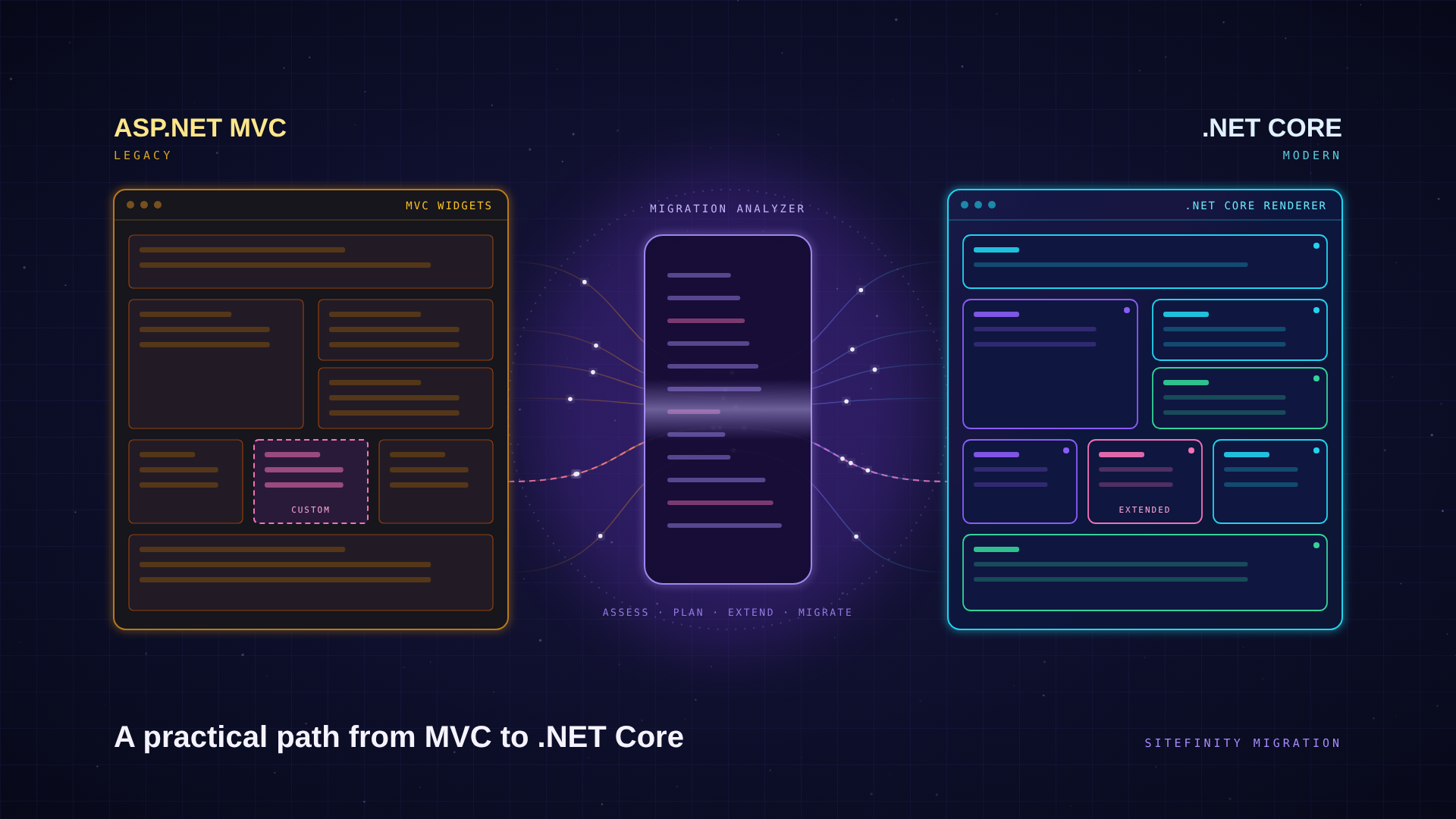
The .NET ecosystem has moved on—and Sitefinity teams are moving with it. If your website still relies on traditional MVC widgets, migrating to Sitefinity’s .NET Core renderer can modernize your platform and prepare your digital experience for what's next.
But a successful migration is more than a framework change. It means understanding how your existing site is built, identifying what can be migrated, and planning for the custom functionality that makes your project unique.
There’s a business case, too: a well-planned migration can make future website improvements easier to deliver and help your platform keep pace with evolving business needs. Assessing what you use today also lets your team focus investment on the features that matter most.
Why consider migrating?
Moving from Sitefinity MVC to the .NET Core renderer is an opportunity to modernize your website and prepare for future development. For businesses, it can provide a clearer path for evolving digital experiences and maintaining the platform over time. Assessing the existing implementation early helps estimate the effort, identify risks, and prioritize the changes that deliver the most value.
Modern technology brings tangible business benefits. Today's users expect websites to be fast, responsive, and seamless across devices. A modern, flexible frontend architecture not only meets these expectations but also helps development teams deliver improvements and new features faster. By reducing technical constraints and accelerating development, businesses can respond more quickly to changing customer needs, improve user experiences, and ultimately get more value from their digital investments.
Start with a clear picture of your project
Progress provides tools to help teams assess and migrate Sitefinity projects, including the Migration Tool CLI and Migration Analyzer.
The Migration Analyzer scans a project and reports which components are used and where they appear across site pages. That visibility helps teams understand the scope of the work, identify commonly used components, and plan migration activities before implementation begins.
This analysis is especially useful when a site has grown over time and its teams need a dependable inventory of existing functionality.
Plan for custom widgets
Built-in functionality is only part of the picture. Many Sitefinity projects include custom widgets created to meet specific business needs. These widgets may not migrate automatically, so the migration tool may need to be extended to handle them.
That work calls for a careful review of how each widget behaves, where it is used, and how its functionality should carry over to the new renderer. Addressing custom components early can reduce surprises and keep the migration aligned with business and user needs.
Bring experience to the migration
Extreme Consulting has extensive experience with Sitefinity migrations, including projects that involve extending migration tooling for custom implementations. Our team can help assess your existing site, interpret analyzer findings, and build a migration approach around your project’s requirements.
Whether you're just starting to explore a move from MVC or ready to plan the implementation, the right expertise can make the process clearer and more manageable.
